

Partial shutdown of Department of Homeland Security
Last week, Congress failed to reach an agreement regarding funding for the Department of Homeland Security, the sole federal agency that has not yet received funding for the remainder of fiscal year 2026. Temporary funding based on the previous year’s budget expired Feb. 13 after negotiations between Republicans and Democrats regarding restrictions on federal immigration enforcement activities failed to produce any agreement before the funding expiration. Although Congress is out of session this week, key lawmakers and Trump administration officials continue to trade proposal offers on a compromise regarding proposed restrictions on immigration enforcement activities but do not yet appear close to an agreement.
The effects of the partial shutdown of DHS on the agency’s operations is expected to be modest as 90% of agency employees are deemed essential and will continue to work. Additionally, immigration-related functions received substantial additional funding in the budget reconciliation law approved by Congress in 2025. As such, the federal E-Verify program used by employers and other immigration services and enforcement activities are expected to continue without interruption. The agencies that could experience substantial effects from the partial DHS shutdown are the Transportation Security Administration, Federal Emergency Management Agency and Coast Guard, depending on the length of the impasse; however, many employees in those agencies also are deemed essential and will continue working. NRCA will provide more information about how the partial shutdown of DHS operations may affect employers as it becomes available.
NRCA supports small-business regulatory relief
On Feb. 11, NRCA joined more than 70 trade associations in urging House leadership to advance meaningful regulatory relief for small businesses throughout the U.S. The letter supports H.R. 1163, the Prove It Act, which was introduced by Rep. Brian Finstad (R-Minn.). The bill would strengthen the Regulatory Flexibility Act, a 1980 law that requires federal agencies to analyze the effects of proposed regulations on small businesses and consider less burdensome alternatives. Despite being on the books for 45 years, agencies have routinely found ways to sidestep these requirements.
The letter notes the dramatic regulatory shifts of recent years. For example, the Biden administration (2021-24) finalized an unprecedented $1.8 trillion in new regulatory compliance costs and added 356 million paperwork hours. Whereas under the Trump administration in 2025, there has been a $128.5 billion reduction in regulatory compliance costs and a reduction of nearly 51 million paperwork hours. However, without congressional action, this relief may only be short-term, and small businesses could suffer from the regulatory fluidity that makes long-term planning and investments difficult.
The Prove It Act cleared the full House in 2024 but stalled in the Senate. Since the new Congress convened last year, a new version of the bill (H.R. 1163) has been approved by the House Judiciary and Small Business committees. It currently awaits further deliberation on the House floor, hence the letter calling for House leadership to take additional action.
NRCA has been steadfast in its support of provisions that protect roofing industry employers from federal overregulation and overreach into their operations and will continue advocating to lessen regulatory burdens wherever possible.
Registration for Roofing Day in D.C. 2026 is open!
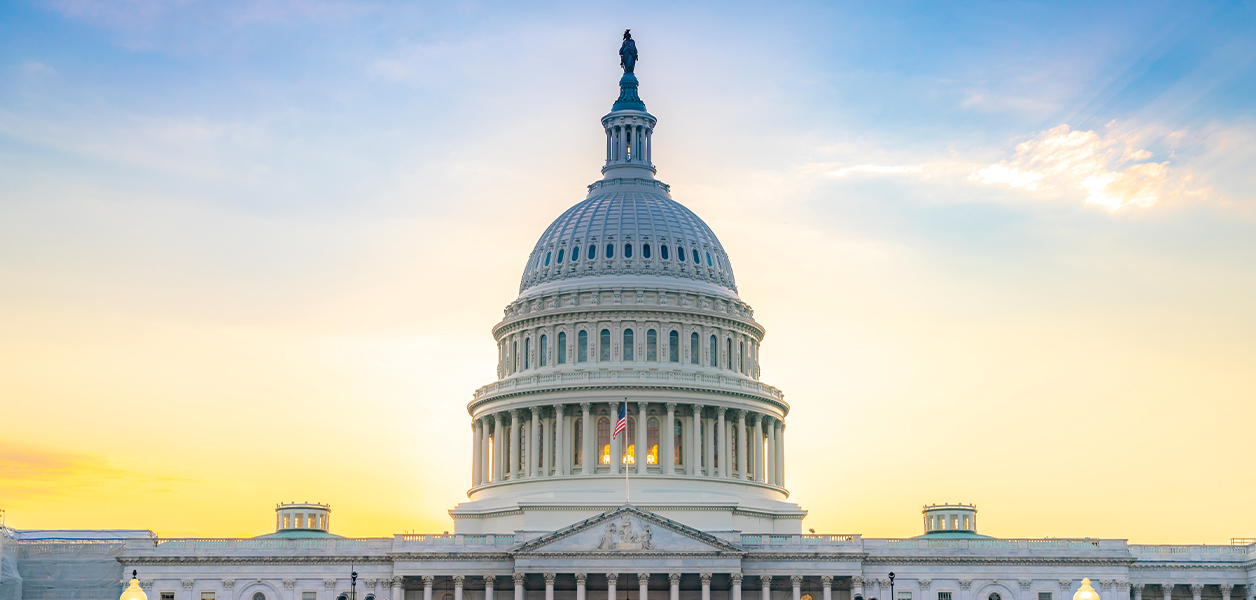
Join your friends and colleagues April 14-15 for the largest advocacy event dedicated solely to the roofing industry. Each year during Roofing Day in D.C., roofing professionals meet with members of Congress and their staffs on Capitol Hill to discuss major issues of importance to the roofing industry. Our priority issues this year will focus on solutions to workforce shortages and addressing the U.S.’ affordable housing crisis.
All you need to do is register! During the event, expert speakers and panelists will inform and inspire you to help you prepare for your meetings on Capitol Hill. As always, attendees will have ample opportunity to network and connect with fellow professionals, and we encourage you to bring key employees to the event.
To view our draft itinerary, book your hotel and register, please visit www.nrca.net/roofingday.
Update regarding Temporary Protected Status for Haitians
On Feb. 14, the Department of Homeland Security provided an update regarding the immigration status of Haitians working under Temporary Protected Status. Under this guidance, the validity of Employment Authorization Documents issued under a series of TPS designations for Haiti dating back to 2017 is extended per court order. This most recent DHS update is in response to a Feb. 2 ruling by a U.S. district court, which temporarily stayed DHS’s termination of TPS for Haiti announced in 2025. With this temporary court injunction followed by the latest DHS guidance, qualifying Haitians with TPS may have the authority to continue working in the U.S. indefinitely pending further litigation.
It should be noted the Trump administration is likely to appeal the court decision, so this is not a final determination. Although work authorization for many Haitians with TPS has been extended, employers with affected individuals within their workforce may still wish to consult legal counsel with respect to the status of their employees. NRCA will continue to provide information about any further guidance provided by DHS.
Minimum wage for federal contract employees
On Feb. 9, the Department of Labor’s Wage and Hour Division published a notice in the Federal Register that updates the hourly minimum wage for employees performing work on or in connection with federal contracts covered by Executive Order 13658, Establishing a Minimum Wage for Contractors. The action sets a minimum wage of $13.65 per hour for workers performing work on federal contracts entered into between Jan. 1, 2015, and Jan. 29, 2022, that were not renewed or extended on or after Jan. 30, 2022. Additionally, the minimum wage for tipped employees performing work in connection with such covered contracts is $9.95 per hour. The new rates will take effect May 11, 2026.
NRCA is aware federal contract work covered by Executive Order 13658 is often also covered by the Service Contract Act or Davis Bacon Act, which establish prevailing wages that are typically higher than the minimum wage established by Executive Order 13658, and the continuing viability of the order may be of limited importance for many federal contractors and subcontractors. Employers with relevant contracts should consult with legal counsel regarding compliance with these federal regulations.