


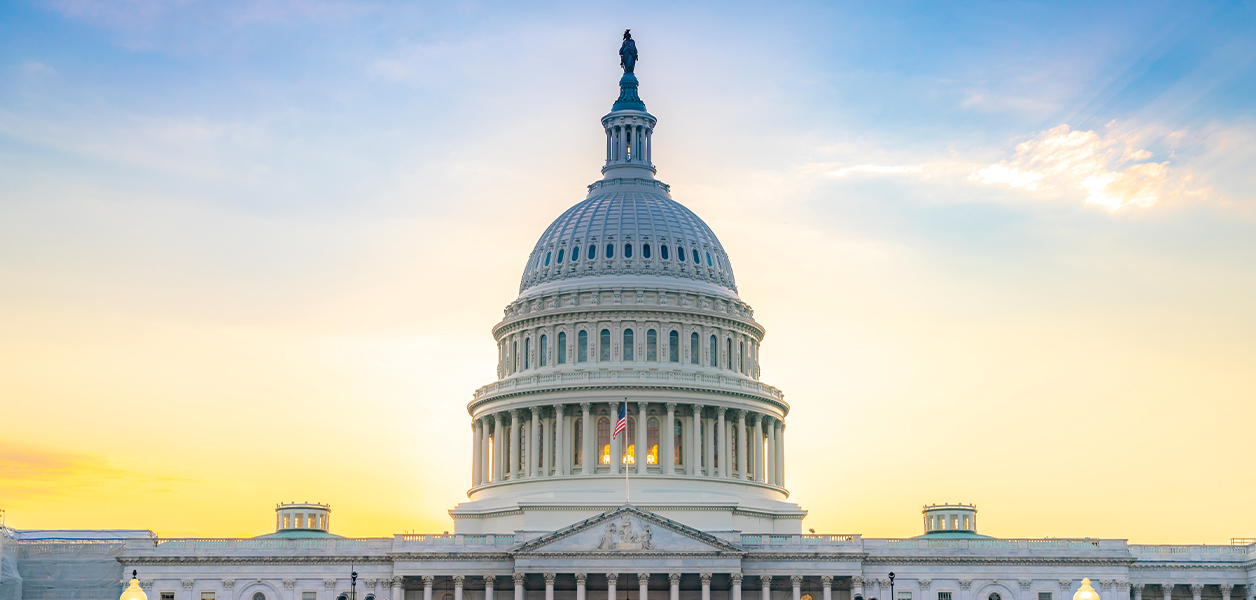
Registration for Roofing Day in D.C. 2026 remains open; hotel deadline nears
Book now! The deadline to reserve your room at the Roofing Day in D.C. 2026 headquarters hotel is March 27.
Join your friends and colleagues April 14-15 for the largest advocacy event dedicated solely to the roofing industry. Each year during Roofing Day in D.C., roofing professionals meet with members of Congress and their staffs on Capitol Hill to discuss major issues of importance to the roofing industry. Our priority issues this year will focus on solutions to workforce shortages and addressing the U.S.’ affordable housing crisis.
All you need to do is register! During the event, expert speakers and panelists will inform and inspire you to help you prepare for your meetings on Capitol Hill. As always, attendees will have ample opportunity to network and connect with fellow professionals, and we encourage you to bring key employees to the event.
For more information about the program and to register, please visit www.nrca.net/roofingday!
Senators weigh in on Occupational Safety and Health Administration heat rule
On March 11, Sen. Bill Cassidy (R-La.), chair of the Senate Committee on Health, Education, Labor and Pensions, led a group of 16 Republican senators in sending a letter to Secretary of Labor Lori Chavez-DeRemer regarding the Occupational Safety and Health Administration’s proposed rule establishing a new standard to protect employees against heat illness in indoor and outdoor workspaces. OSHA had published a proposed rule during the closing months of the Biden administration that NRCA and many other construction industry groups opposed because of numerous concerns with the proposal’s feasibility and effectiveness. NRCA’s concerns were outlined in testimony provided to OSHA in June 2025. The senators’ letter outlines similar concerns with OSHA’s proposed rule expressed by constituents in their states and urges the secretary to “consider these challenges … as you engage in further rulemaking and consider how to center worker safety in the ongoing discussion regarding pragmatic solutions for preventing heat-related hazards in the workplace.” NRCA commends Cassidy for his leadership regarding this letter and will remain engaged with Congress and the agency as it proceeds with potential regulatory actions related to this issue.
Trump administration announces new tariff investigations
On March 11, U.S. Trade Representative Jamison Greer announced new tariff investigations designed to replace tariffs issued in 2025 under the International Emergency Economic Powers Act that were struck down by the Supreme Court in February. Shortly after the court decision, the administration announced it would immediately issue a new global tariff under Section 122 of the Trade Act of 1974 as an alternative to the nullified tariffs. However, those tariffs will expire 150 days after the effective date of Feb. 24 without action to extend them by Congress. The newly announced trade investigations will be launched under Section 301 of the Trade Act and include some of the U.S.’ largest trading partners, including China, the European Union, Mexico, India, Japan and South Korea. The investigations, which often take months to complete, are required for the president to unilaterally levy tariffs on imports from specific countries deemed to employ unfair trade practices. View more information about the new tariff investigations.
Workforce Pell Grant program moves forward
On March 6, the Department of Education announced the publication of a Notice of Proposed Rulemaking to implement the Workforce Pell Grant program approved as part of the One Big Beautiful Bill Act (also known as the Working Families Tax Cuts Act) by Congress and signed into law by President Trump in 2025. This program expands Pell Grant eligibility to students in short-term, career-oriented training programs, putting workforce programs on a level playing field with other educational programs. Under Workforce Pell Grants, students must meet the standard financial need criteria for traditional Pell Grants and eligible programs must be offered by accredited institutions that participate in federal financial aid. These programs must be between eight and 15 weeks in length and prepare students for employment in high-skill, high-wage or in-demand jobs. The training must result in a portable, industry-recognized credential that can count toward an associate or bachelor's degree and meet performance standards to remain eligible.
NRCA supported the bipartisan Workforce Pell Grant legislation and worked toward its approval for many years and is pleased to see the administration moving forward with implementing regulations, which are scheduled to take effect July 1, 2026. NRCA will review the proposed rule and provide comments based on member feedback, which are due April 8.
Bipartisan housing package continues through legislative process in Senate
On March 12, the Senate voted 89-10 on final passage of a sweeping bill to address housing affordability, the 21st Century ROAD to Housing Act. This action continues the effort on the part of lawmakers to address growing concerns about day-to-day affordability leading up to the midterm elections this fall.
The bill seeks to combine the House and Senate’s housing priorities with the Trump administration’s push to ban large institutional investors, such as Blackstone Inc., from purchasing single-family homes. Major tenets of the 21st Century ROAD to Housing Act include requiring the Department of Housing and Urban Development to issue best practices regarding zoning and design for cities and states; expanding affordable housing programs currently available to Americans; and easing regulations for development and construction. The House passed its package (H.R. 6644, the Housing for the 21st Century Act) several weeks earlier.
Despite this mostly being a bipartisan endeavor, there remains some division among Republicans and Democrats in both chambers regarding the Senate’s insertion of specific community banking reforms, as well as the upper chamber inserting a provision mandating a seven-year selling requirement on build-to-rent properties stemming from the effort to ban large investors from acquiring residential homes The two chambers are now expected to convene a conference committee to negotiate a final bill that can ultimately be sent to the president for his signature into law.
NRCA has made addressing the need for affordable housing an advocacy priority because it is an issue that unites the roofing industry and is timely given its current national focus. It will be a featured topic at Roofing Day in D.C., where two complementary pieces of legislation will be highlighted that would incentivize the conversion of vacant or underused commercial property, as well as the construction and/or upgrading of residential homes in certain areas of the U.S.
Department of Treasury and IRS issue interim guidance for new manufacturing facilities
The Department of Treasury and the IRS have provided interim guidance for taxpayers regarding the special depreciation allowance for qualified production property enacted under the One Big Beautiful Bill Act, which was passed into law in July 2025.
Specifically, Notice 2026-16 announces the Treasury Department and the IRS will issue proposed regulations regarding a new provision allowing taxpayers to elect to take a depreciation deduction up to 100% of the unadjusted depreciable basis of any qualified production property placed in service during a taxable year. Typically, qualified production property is nonresidential real property used by a taxpayer as an integral part of a qualified production activity. A qualified production activity is a manufacturing, chemical production, agricultural production or refining activity that results in the substantial transformation of the property comprising a qualified product. Note: The special depreciation allowance only applies to qualified production property placed in service after July 4, 2025, and before Jan. 1, 2031.
Taxpayers may rely on the guidance provided in the notice until proposed regulations are issued. In addition, the Treasury Department and the IRS are requesting comments on the interim guidance that should be submitted within 60 days of the issuance of the notice Feb. 20.
View more information about Notice 2026-16 and instructions to submit taxpayer comments. NRCA will be analyzing the guidance and providing any comments based on member feedback.