

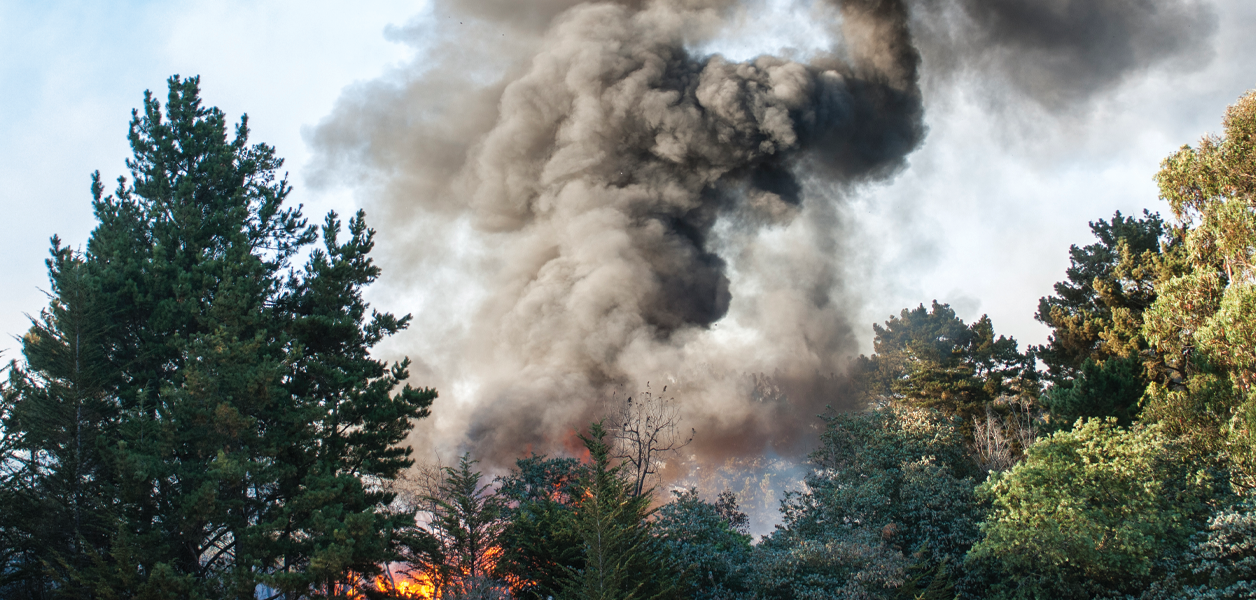
Wildfire smoke that shut down job sites throughout the West dissipated last week after numerous contractors had stopped work on projects because of heavy smoke that drove the Air Quality Index higher than 600, beyond the upper 500 limit on the Environmental Protection Agency’s hazardous air quality chart, according to www.constructiondive.com. The Oregon Health Authority said increased pollution has been associated with a higher risk of respiratory infections, which has serious implications during the COVID-19 pandemic.
At least 2,193 projects in the West were in counties where the Federal Emergency Management Agency declared a disaster and were likely affected by the smoke, according to data from Built Technologies.
The EPA and the Occupational Safety and Health Administration do not have mandates regarding when outdoor work should stop because of hazardous air quality, and the lack of guidance only worsens the problem for construction firms, said Michael Zisa, partner at construction law firm Peckar & Abramson.
Zisa said contractors may have legal exposure if a worker were to become sick at work during unhealthy or hazardous air quality days.
“When confronted with ambiguous standards or requirements, contractors are left to determine on their own how to balance the need to protect their employees and other workers with the need to meet their obligations to the project owner, which can expose them to legal, regulatory and reputational problems,” Zisa said.
Greg Sizemore, vice president of health, safety, environment and workforce development at Associated Builders and Contractors, said contractors should use their best judgment to protect themselves and their workers. He recommends contractors talk with owners about the health effects of working in such conditions and potential liability continuing work in those situations could bring. He emphasized contractors need to do what is necessary to put their workers’ health first.